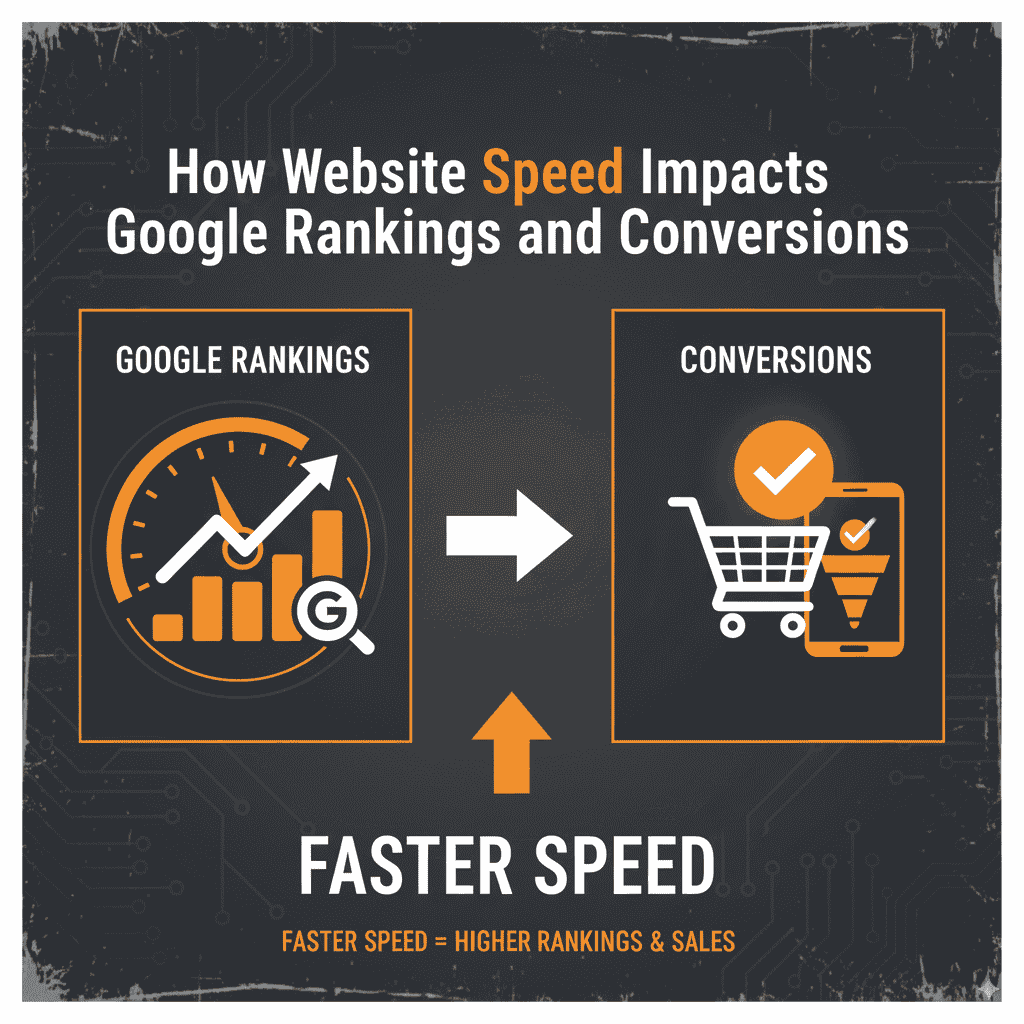
How Website Speed Impacts Google Rankings and Conversions
In today’s digital world, users expect instant access to information. If your website takes more than a few seconds to load, visitors may lose patience and leave — costing you customers and revenue. Website speed is not just about user experience; it’s a critical ranking factor in Google’s algorithm.
Why Speed Matters for Google Rankings
Google wants to deliver the best experience to its users. A slow-loading website can damage your SEO, push your rankings down, and directly impact your sales and conversions. Core Web Vitals, mobile-first indexing, and competitive edge all depend on speed.
The Impact of Speed on Conversions
Even if you rank on the first page, a slow website will ruin your chances of converting visitors. 53% of mobile users abandon websites that take longer than 3 seconds to load. For an eCommerce site, a 1-second delay could cost thousands in lost revenue every single day. Fast websites win customers; slow ones lose them.
Key Factors That Affect Website Speed
Hosting Provider
Large Images
Unnecessary Plugins
Poor Code Quality
FAQs
Because it directly impacts user experience. A faster site keeps visitors engaged and signals quality to Google’s ranking algorithm.
Ideally, your website should load in under 2–3 seconds. Anything longer increases the chance of visitors leaving your site.
Yes, slow websites reduce customer trust and increase abandonment rates. Even a 1-second delay can cause thousands in lost revenue for businesses.